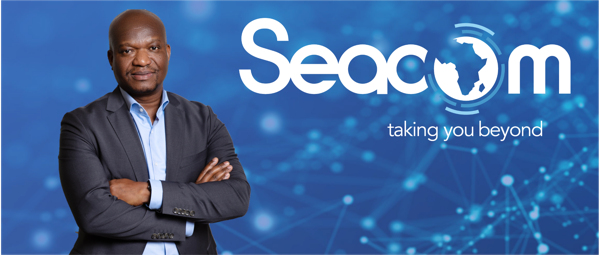
Shaping tomorrow's tech leaders: Inside Seacom's NextGen programme
By Alpheus Mangale, Group CEO of Seacom
Early in my career, starting out as a systems engineer, I was given something that changed the course of my professional life: access. Senior leaders brought me into rooms where decisions were being made, trusted me with problems that stretched me, and held me to a standard that forced me to grow.
They saw what I could become before I had fully demonstrated it. I understood the significance of that access. Proximity to leaders I respected did not just develop my technical skills, it shaped my understanding of what this industry is capable of. Not just connecting infrastructure, but significantly changing the trajectory of people. I have carried that conviction into every leadership role since. It is the reason I take mentorship and deliberate access to opportunity seriously as leadership obligations.
In today's fast-growing, digitally powered economies, that conviction applies with particular force. Africa is home to more young people than any other region on earth. Almost 60% of the continent's more than 1.5 billion people are under 25. That is often described as a demographic dividend. But dividends are not automatic. They are the return on investment. If we do not invest deliberately in skills, access and employability, the dividend remains only a statistic. A large young population without access to skills or meaningful employment becomes a constraint on growth rather than a driver of it. And in the technology sector specifically, the risk runs deeper: if Africa does not develop its own technical workforce at pace, the continent's digital transformation stalls. The economic value does not compound. The skills required for the next leap forward are not built.
Across the continent, businesses are accelerating digital transformation, adopting cloud infrastructure, integrating AI, investing in cybersecurity and building data capabilities. The talent pipeline has not kept up. The World Bank estimates that only 11% of Africa’s tertiary graduates have formal digital training, while around 65% of new hires at surveyed firms already require at least basic digital skills to be effective in the workplace. This is not a reflection on the quality of graduates. It is a structural gap between what education systems were designed to produce and what a fast-moving digital economy now demands. Organisations need people who can operate from day one in complex, high-pressure environments. That gap will not close by itself.
This is where companies in the technology sector have a responsibility to step in. It is straightforward to talk about Africa’s talent potential. It is harder to make the institutional commitments that actually develop it. Structured graduate programmes, rotational exposure across business functions, globally recognised certifications, mentorship from senior engineers and technical leads: these things require sustained investment and genuine organisational will. They cannot be treated as a side programme or a reputational exercise.
This is the thinking behind Seacom’s NextGen Digital Graduate Programme. Active across South Africa, Kenya and Tanzania, the two-year programme rotates graduates through different parts of the business, providing technical training, mentorship, hands-on project work and exposure to high-demand disciplines including cloud, cybersecurity, AI, DevOps and data analytics. Participants pursue globally recognised certifications and work directly alongside senior engineers and technical leads. In Kenya, partnerships with institutions such as ICS Technical College, Swahilipot and the University of Nairobi, along with visits to facilities like Seacom’s Mombasa Cable Landing Station, help turn theory into real-world experience while strengthening the link between education and industry.
Equally important is the programme's commitment to diversity and inclusion. Digital economies are stronger when they reflect diverse perspectives, experiences and voices. That means making deliberate choices about where you recruit, who you mentor and what barriers you remove. The technology sector on this continent cannot afford to develop talent from a narrow base and then wonder why its workforce does not reflect the society it serves.
As the continent moves toward broader AI adoption and more sophisticated digital infrastructure, the organisations that will lead are those that treat talent development as a strategic priority before the demand becomes acute. The companies that wait on the sidelines will find themselves competing for a small pool of people they did not help to create.
Africa’s young people are capable, driven and ready to compete on any stage, given the platform to do so. The obligation on those of us who lead organisations in this sector is not to celebrate that potential in the abstract. It is to build the structures that turn potential into capability and active participation.
FIN. (Word count 709)
Click here to download the Word version of this article for easy media use.docx
DOCX 81 KB

Seacom media team